Mailheight


Most outbound email platform comparisons come down to a feature list: how many mailboxes, how many sequences, how fast can we send. That framing misses the thing that actually decides whether your outreach lands in an inbox. A story about a ketchup company makes the point better than any deliverability dashboard.
Nithyanandan Ramakrishna shared that story in a post about how outbound software is built. You can read it here: the original LinkedIn post.
The Pampero story, briefly
Pampero was once Venezuela's top ketchup brand. Its edge came from a step its larger competitors skipped: taking the skins off the tomatoes. Removing the skins was said to improve flavour and colour. When Heinz and Del Monte started gaining ground, consultants looked for the real cause and traced it back to that single step.
Here is the part worth sitting with. Pampero was already planning a new automated process that would leave the skins on. The recommendation was to stop. Do not modernize away your advantage.
What this has to do with outbound email
Outbound software has a consistent direction of travel: more automation, more volume, more mailboxes, more sequences, fewer checks. Every one of those features sounds like progress when you are staring at a spreadsheet of pipeline targets. But the checks are often the advantage. They are what keeps your domains healthy and your client relationships intact.
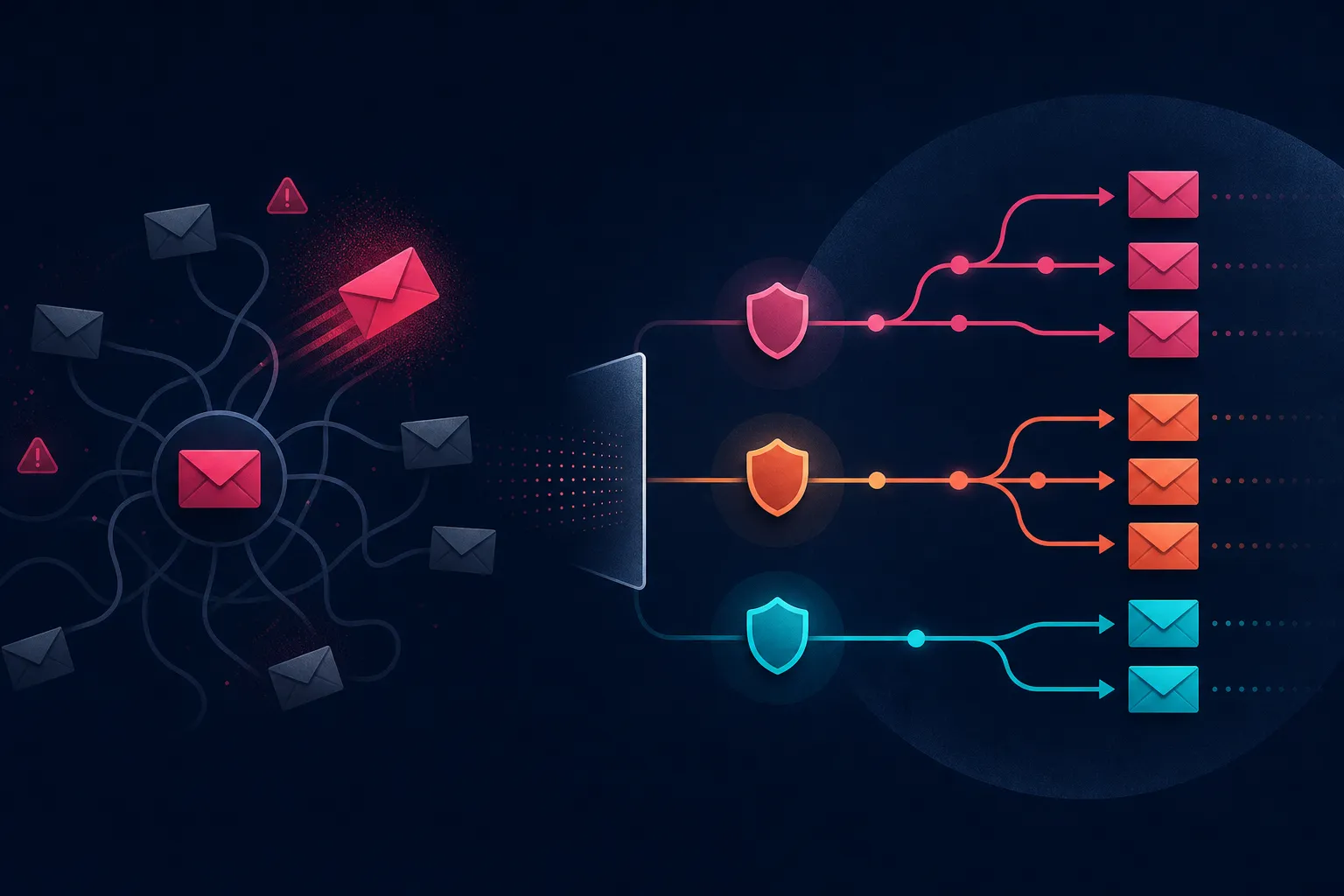
The post describes how MailHeight keeps some friction on purpose. It validates the contact. It screens for spam traps. It checks the message. It asks for approval before anything goes out. It controls the pace. It will not email the same person twice for the same client in one day. It stops when they reply. It pauses when they are out of office. It carries suppression forward.
That restraint looks inefficient only if your one measure is how fast you can press Send.
Why the checks exist
A few of these deserve unpacking, because they map directly onto the risks agencies carry when they run outreach on behalf of clients.
Contact validation
Sending to addresses that do not exist produces bounces. A high bounce rate is one of the clearest signals to mailbox providers that a sender is not careful about who it emails. Validating contacts before sending is basic hygiene, and it is the cheapest deliverability work you can do.
Spam trap screening
Spam traps are addresses that exist only to catch senders who are not maintaining their lists. Some are recycled addresses that once belonged to real people. Others are addresses that were never real and only appear on purchased or scraped lists. Hitting them repeatedly damages your sending reputation. Screening for them before you send is far less painful than repairing a domain afterwards.
Message checks and approval
A human review step before a campaign goes out catches the things automation misses: a broken merge tag, a claim a client has not approved, a link to the wrong landing page. For agencies, approval is also a liability control. You want a record that someone signed off before the email went to a client's prospects.
Pacing
Sending too much, too fast from a new or lightly used domain is a well known way to get throttled or filtered. Controlling the pace gives mailbox providers time to build a positive sending history.
Reply and out of office handling
Stopping when someone replies is not just polite. Continuing to email someone who has already responded makes your outreach look automated in the worst way, and it can push a warm prospect toward the spam button. Pausing for out of office replies protects the conversation until the person is back.
Suppression carried forward
If a prospect asked not to be contacted, that preference should follow them across every campaign and every client context where it applies. Suppression that resets between sequences is how people get emailed the same pitch three times.
The comparison trap
When you evaluate platforms, it is easy to score tools on throughput. More mailboxes and more sequences feel like more capability. But ask what happens when those features run without guardrails. Volume amplifies whatever your process already does, good or bad. If your process sends to unvalidated lists at an aggressive pace, more volume just gets you to a deliverability problem faster.
The better question is what the platform refuses to do. Does it stop you from emailing the same contact twice in a day for the same client? Does it require approval before a send? Does it screen contacts before they enter a sequence? Does it respect a reply automatically? Those answers tell you more about your long term results than any sending limit.
A practical checklist for agencies
Before you switch or renew, run through these questions with any vendor:
- How are contacts validated before they enter a sequence?
- Is there spam trap screening, and at what stage does it happen?
- Can we require approval before a campaign sends?
- How is sending pace controlled, and can we adjust it per domain?
- What happens automatically when a prospect replies or sets an out of office?
- Does suppression carry across campaigns and clients?
- Can the platform prevent duplicate outreach to the same person within a defined window?
If a vendor cannot answer these clearly, that is information too.
Friction is a feature
The Pampero lesson is not really about ketchup. It is about knowing which step creates your advantage and refusing to automate it away for the sake of looking modern. In outbound email, the steps that look slow, validating, screening, reviewing, pacing, are the ones that keep your clients' domains out of trouble and their replies coming in.
If you are comparing platforms, ask how each one handles the checks. The answer will tell you whether it is built for a fast quarter or a durable sending reputation.