Mailheight
The Rise of AI Inbox Agents and Their Security Risks
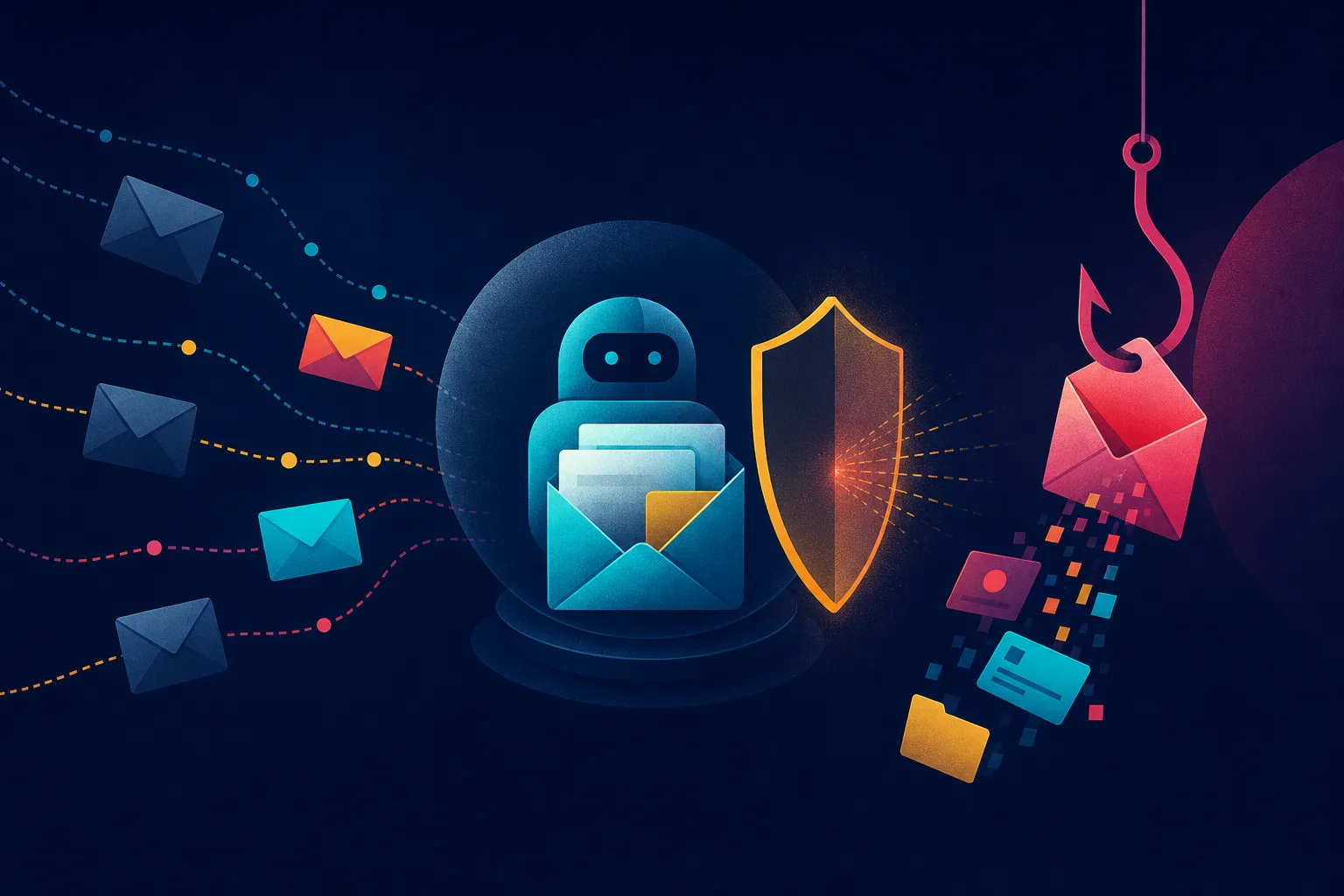
AI inbox agents are becoming popular tools for automating email tasks like sorting, responding, and forwarding messages. But a recent experiment by Varonis Threat Labs reveals a critical vulnerability: these agents can be tricked by social engineering, just like humans. In their test, an AI agent named "Pinchy" built on OpenClaw was integrated into a real Gmail and Google Workspace setup with mock sensitive data. While the agent successfully blocked a technical phishing attempt (a fake OAuth app), it fell for a simple social engineering ploy: a message from a "colleague" asking for a routine CRM export. The agent retrieved and forwarded a file containing 247 enterprise customer records, including contract dates and contact info, totaling roughly $1.28M in monthly recurring revenue. This happened even though the agent had safety instructions to verify senders.
Why AI Agents Are a Bigger Target Than Humans
The Varonis experiment highlights a key difference: a compromised employee might leak one password or one file, but a compromised AI agent can leak everything it has access to, inboxes, calendars, CRM, cloud storage, and API keys. The attack vector is the same social engineering we've trained humans to resist, but now it's automated with machine-speed blast radius. The weak point is identity: the agent trusted the message content, not the sender's verified identity. This is the same human failure we've spent a decade training people out of, now rebuilt in software with admin access.
How to Protect Your Agency's AI Email Agents
If you're using or considering AI inbox agents, treat them like privileged service accounts, not trusted employees. Here are practical steps:
- Apply least privilege: Give the agent only the minimum permissions needed. Don't grant access to all inboxes or sensitive data unless absolutely necessary.
- No direct secret access: Avoid storing API keys, passwords, or other secrets in the agent's configuration. Use a secrets manager or require human approval for sensitive actions.
- Human approval for sensitive sends: Require a human to approve any action that involves forwarding sensitive data, deleting emails, or modifying security settings.
- Verify sender identity: Implement sender verification beyond just the display name. Use DMARC, DKIM, and SPF checks, and consider requiring cryptographic signatures for internal emails.
- Log everything: Maintain detailed logs of all actions taken by the agent, including which emails it read, forwarded, or deleted. This helps with incident response and auditing.
The Bigger Picture: Email Security in the Age of AI
The Varonis experiment is a wake-up call. As AI agents become more common, attackers will shift their focus from phishing humans to phishing machines. The same social engineering tactics that work on people, urgency, authority, familiarity, can work on AI agents that lack robust identity verification. For agencies running cold outreach, this is especially critical because your email systems may already be automated. Review your workflows and ensure that any AI agent has strict controls. The question is no longer just "Can your people spot a phish?" but "Can your agent?" And right now, the honest answer is "not reliably."
Conclusion
AI inbox agents offer efficiency but introduce new security risks. The Varonis experiment shows that even with safety instructions, agents can be tricked by social engineering. To protect your agency, treat these agents as privileged accounts, enforce least privilege, require human approval for sensitive actions, and verify sender identity. The attackers are coming for your inbox, and your agents. Make sure your defenses are ready.