Mailheight
The Authentication Gap in Email Security
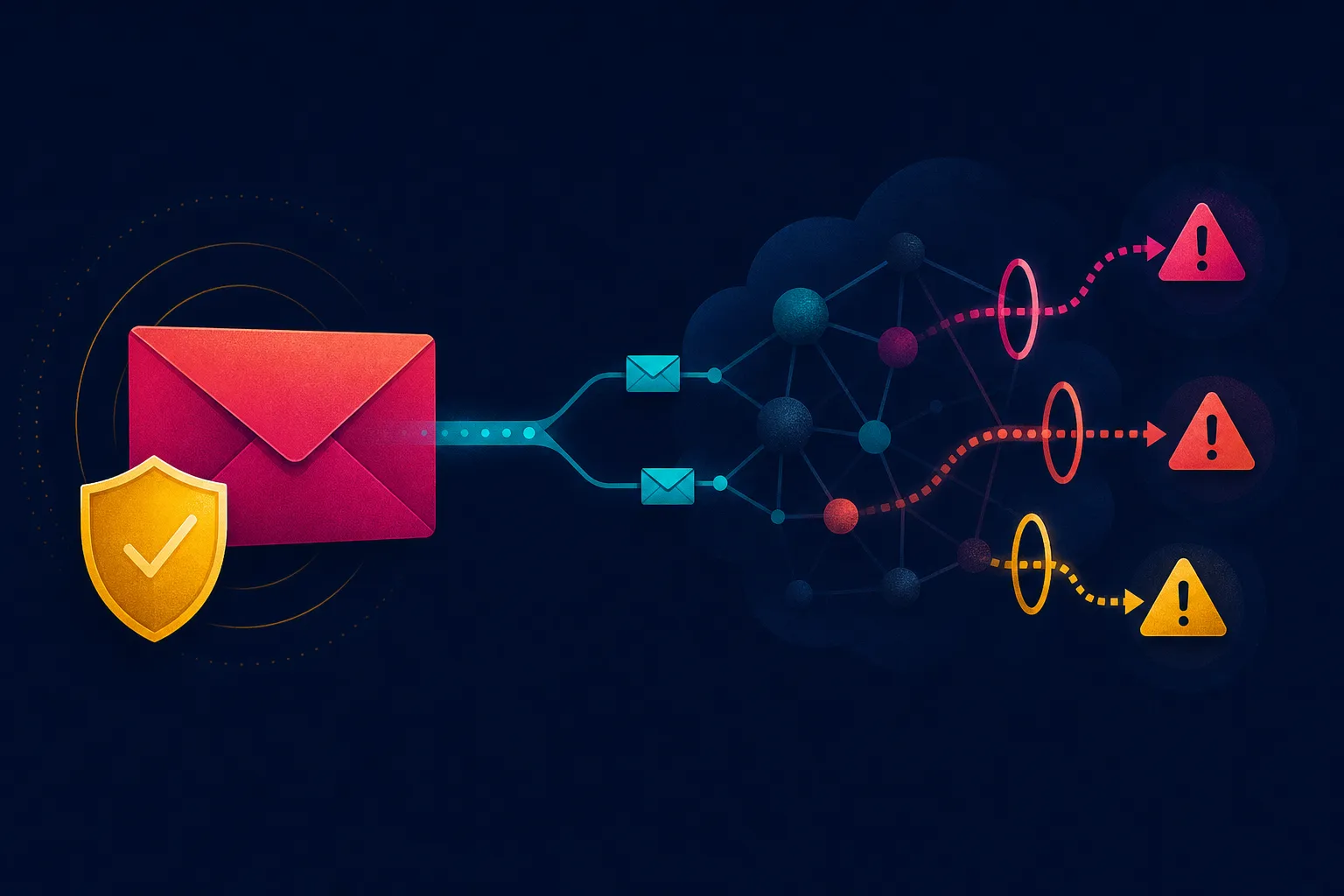
Most email security reviews stop at authentication. SPF, DKIM, and DMARC all pass. Reputation is clean. The box is ticked, and the investigation is closed. But as Nithyanandan Ramakrishna points out in the original LinkedIn post, authentication proves who sent the message, not where the call-to-action link finally leads. That gap is where threats hide.
A clean sender can carry a malicious destination. The real question isn't whether the message is authenticated. It's whether the destination is safe. That answer doesn't live in the deliverability layer. It lives one boundary over.
How Threats Bypass Authentication
Consider this scenario: The sending domain is clean. One link resolves to a shared wildcard host. That host carries nearly 13 URLs already flagged as malicious, none of them belonging to the sender. The contamination sits one domain beyond the sender. Most deliverability experts never cross that line because it isn't "their" layer.
Where you stop decides what you find. Stop at the discipline's edge, and you stop short of the threat. The boundary isn't where the work ends. It's where the threat was hiding.
Why Deliverability Reviews Miss This
In most deliverability reviews, the link trace is often overlooked. You see SPF/DKIM/DMARC green, but nobody checks where the redirect lands or if the root host is on any shared blocklists. Spammers have been pushing payloads one domain past the sender for a while now, especially on wildcard hosts or mass-link shorteners. Anything tracking clickthroughs at scale is an attack surface.
Some teams have had to start pulling full link-resolution scripts just to catch the rot before inboxes did. Reputation tanks can come from a link contamination you didn't own.
The Bigger Picture: Authentication Theater
Authentication theater is a growing problem. Many domains publish DMARC, but only a fraction actually enforce it. For example, one study found that while 83% of major domains publish DMARC, only 4% protect email in transit with MTA-STS and TLS-RPT. The hard part, actually protecting mail in flight, gets skipped.
Banks tend to lead with 98.5% DMARC enforcement, while news outlets lag at 75.4%. But even among those that enforce, the focus remains on authentication, not destination security.
Practical Steps for Agency Owners
For agencies running cold outreach, here's how to close the gap:
Trace every link in your emails. Use link-resolution scripts to follow redirects and check the final destination against threat intelligence feeds.
Avoid shared wildcard hosts and mass-link shorteners. These are common attack surfaces. If you must use them, monitor their reputation regularly.
Check the root host of any link. Even if the sending domain is clean, the host one domain away could be contaminated.
Extend your deliverability review beyond authentication. Include a security layer that checks destination safety, not just sender identity.
Educate your team. Make sure everyone involved in email outreach understands that authentication is only the first step.
Conclusion
Email authentication is essential, but it's not enough. The threat doesn't respect job titles. It sits one click past the line, in territory labeled "security." By extending your review to include destination security, you can catch threats that authentication alone misses. Don't stop at the discipline's edge. That's where the threat is hiding.