Mailheight
The AI-Driven Shift in Email Security
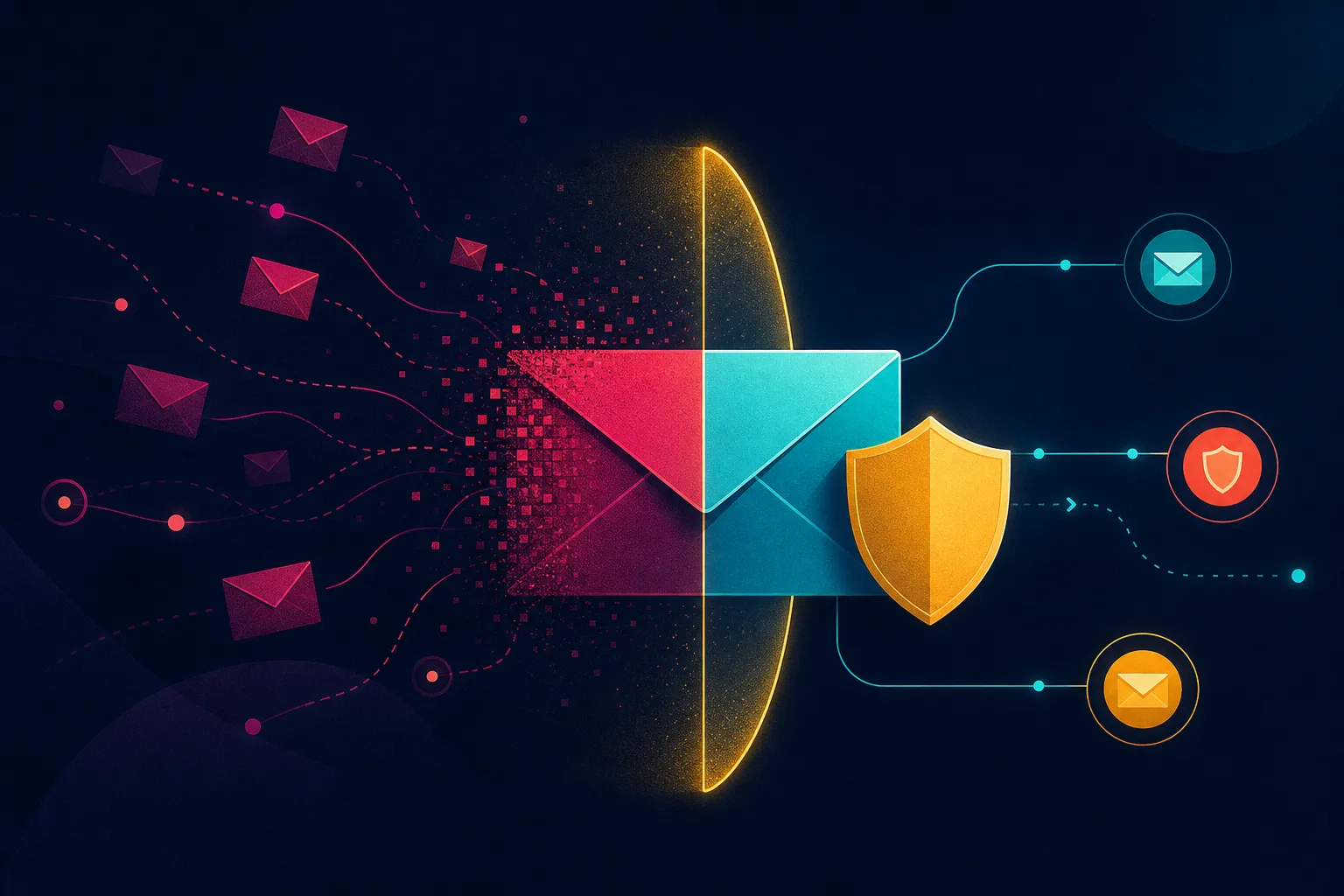
Proofpoint has warned that advanced AI tools are making phishing and email impersonation attacks more convincing and scalable. According to a recent report, many of India's largest enterprises have adopted email security measures, but gaps remain. As AI accelerates the scale and sophistication of phishing attacks, Proofpoint urges companies to close remaining email security vulnerabilities.
This trend is not limited to India. Thales' 2026 Data Threat Report found that 71% of organizations in Asia Pacific now see AI as their top data security risk. The same forces that make phishing more dangerous also affect legitimate cold email outreach. AI-powered spam filters are becoming more aggressive, and inbox placement is harder to achieve.
How AI Is Changing the Threat Landscape
AI-generated phishing has become the dominant email threat in 2026, rendering signature-based detection obsolete. Generative AI fundamentally changes the attack surface because it can craft highly personalized, grammatically perfect messages at scale. This means security filters must rely more on behavioral analysis and sender reputation rather than simple keyword or pattern matching.
For cold email senders, the consequence is clear: email providers are tightening their defenses. Google's bulk sender rules and DMARC enforcement are already in place, and AI-powered filters are now better at distinguishing between legitimate outreach and spam. If your emails look even slightly suspicious, they may land in spam or be blocked entirely.
What This Means for Cold Email Deliverability
Cold email in 2026 is fundamentally different from even two years ago. DMARC enforcement, AI-powered spam filters, and stricter privacy laws have raised the bar. To maintain inbox placement, senders must follow best practices:
- Authenticate your domain properly. SPF, DKIM, and DMARC are non-negotiable. Without them, your emails are more likely to be rejected or flagged.
- Warm up new sending domains. Start with low volume and gradually increase to build a positive reputation.
- Monitor bounce rates and spam complaints. Keep bounce rates below 2-3% and spam complaints below 0.1%.
- Personalize and segment your lists. Generic blasts are more likely to be marked as spam.
- Avoid spammy language and excessive links. AI filters are trained on millions of spam examples.
Proofpoint's 2026 report highlights a widening divide between rapid AI adoption and security readiness. The same divide exists in cold outreach: many senders still use outdated tactics that trigger modern filters.
The Role of Email Authentication
Email authentication protocols like SPF, DKIM, and DMARC are essential for proving your identity. Without them, your emails can be easily spoofed, damaging your sender reputation. Proofpoint's warning about AI widening security gaps underscores the importance of authentication. If you are not properly authenticated, your emails may be seen as potential phishing attempts.
For cold outreach, DMARC enforcement is particularly important. Many email providers now reject or quarantine emails that fail DMARC checks. Ensure your DMARC policy is set to "p=quarantine" or "p=reject" after monitoring, and align your SPF and DKIM records.
Practical Steps for Cold Outreach in 2026
- Use a dedicated sending domain. Separate your cold email domain from your main business domain to protect your primary domain's reputation.
- Implement BIMI (Brand Indicators for Message Identification). This adds a verified logo to your emails, increasing trust and click-through rates.
- Limit daily sending volume. Stick to 20-50 emails per address per day, depending on your domain's age and reputation.
- Track engagement metrics. Remove unengaged recipients after 30-60 days to maintain list hygiene.
- Test your emails before sending. Use tools to check spam score and preview how your email renders across clients.
The Future of Email Security and Outreach
As AI continues to evolve, the arms race between attackers and defenders will intensify. Proofpoint is unifying its secure email gateway (SEG) and cloud email security approaches to address this. For cold outreach senders, staying ahead means continuously adapting to new security measures.
The key takeaway is that email deliverability in 2026 depends on trust. Build your sender reputation slowly, authenticate everything, and respect recipient preferences. The days of blasting thousands of unpersonalized emails are over. Those who adapt will see better open rates and conversions; those who don't will struggle with inbox placement.
Conclusion
Proofpoint's warning about AI widening email security gaps is a wake-up call for all email senders. For cold outreach, the path forward is clear: prioritize authentication, monitor your reputation, and use AI responsibly to personalize your campaigns. By doing so, you can navigate the new landscape and keep your emails landing in the inbox.